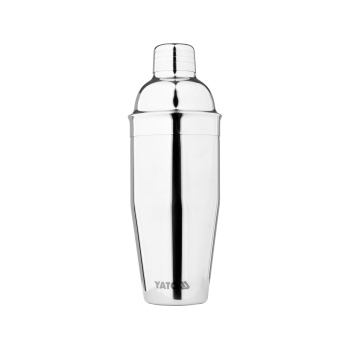
Shakers are essential bar tools used for mixing drink ingredients by shaking. The construction of a shaker allows efficient blending of ingredients with different densities, aeration of the mixture, and rapid cooling through contact with ice. In professional gastronomy, shakers are indispensable for preparing emulsions, citrus-based cocktails, drinks with egg whites, and all beverages requiring intensive mixing.
The shaking process involves vigorously shaking the ingredients for 10-15 seconds, which breaks the ice cube into smaller fragments, mixes the components thoroughly, and lowers the drink's temperature to 2-4°C. The efficiency of this process depends on the shaker's design, material, and the bartender’s technique.
We offer 4 main categories of shakers:
- Boston Shakers – two-piece tools consisting of a metal tin (0.8-1.0 l) and either a mixing glass or a second smaller tin (0.4-0.5 l). A Boston shaker requires a separate strainer but provides maximum working capacity and the fastest mixing.
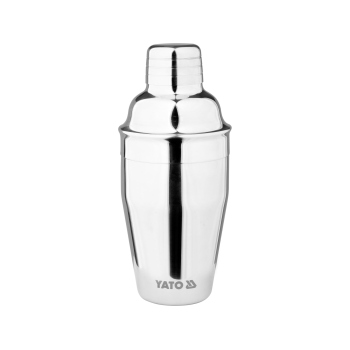
- Cobbler Shakers (3-piece) – complete sets including the main tin, a lid with a built-in strainer, and a cap. Capacity 0.75 l, standard dimensions 85x240 mm. Ideal for beginner bartenders.
- Tin-Tin Shakers – two-piece shakers made entirely of metal, consisting of tins with capacities of 0.8 l and 0.5 l. The larger tin has a diameter of 90 mm, ensuring a stable grip.
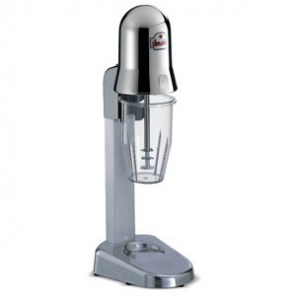
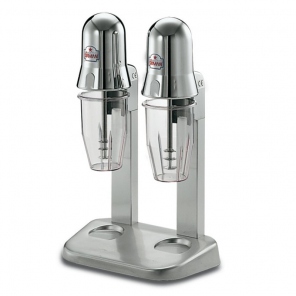
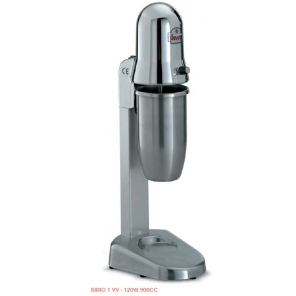
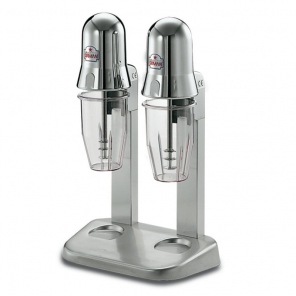
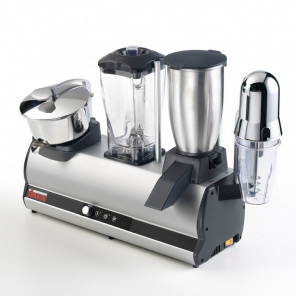
- Sirman Electric Mixers – automatic devices with power ratings of 100–120W, capacities from 0.35 l to 0.9 l, powered by 230V. Designed for venues with high drink turnover.
Technical parameters and materials
18/10 stainless steel is the primary construction material of professional shakers. The composition of 18% chromium and 10% nickel ensures corrosion resistance, easy cleaning, and flavor neutrality. The wall thickness in high-quality shakers ranges from 0.8 to 1.2 mm, guaranteeing rigidity and thermal conductivity.
Copper has the highest thermal conductivity coefficient (401 W/m·K), resulting in 40% faster cooling of drinks compared to stainless steel. Copper shakers require a protective coating against oxidation and regular maintenance.
Tempered glass used in the upper parts of Boston shakers withstands temperature differences up to 120°C. The wall thickness of 3–4 mm ensures resistance to thermal cracking upon contact with ice.
Capacity and dimension specifications
Standard working capacities of shakers are:
- Cobbler Shakers: 0.75 l (total), 0.45 l (working capacity with ice)
- Boston Shakers – main tin: 0.8–1.0 l, upper part: 0.4–0.5 l
- Tin-Tin Shakers: large tin 0.8 l, small tin 0.5 l
- Sirman Mixers: 0.35 l to 0.9 l working capacity
Standard dimensions for manual shakers:
- Diameters: 80–90 mm (affects grip ergonomics)
- Heights: 175–240 mm (depending on type and capacity)
- Weight: 200–450 g (affects fatigue during intensive work)
Selection criteria and applications
The choice of shaker depends on the profile of the venue and the type of drinks prepared. Cocktail bars require Boston or Tin-Tin shakers due to speed and capacity to handle large orders. Restaurants with a bar section are better suited with Cobbler shakers, which reduce spillage risk and do not require additional accessories.
Usage intensity determines material selection. For over 50 drinks daily, stainless steel or copper shakers are recommended for durability. Glass should be reserved for venues with lower traffic.
Type of drinks influences construction choice. Cream cocktails, egg white, or dairy-based drinks require intensive shaking – Boston and Tin-Tin models work best. Simple mixes can be prepared with Cobbler shakers or electric mixers.
Maintenance and lifespan
Professional shakers, with proper care, remain functional for 3–5 years of intensive use. Daily cleaning requires detergent with pH 7–9, water temperature 50–60°C, and mechanical removal of residues. Copper shakers need specialized anti-oxidation agents.
Storage should be in a disassembled position to prevent parts from sticking and to allow complete drying. Rubber components (gaskets) should be replaced every 6–12 months depending on intensity of use.
Quality control includes checking the tightness of joints, the condition of working surfaces, and the functionality of closing mechanisms. Scratches deeper than 0.2 mm on food-contact surfaces require replacement of the part.
Electric mixers as an alternative
Sirman electric mixers offer process automation while maintaining professional standards. Available models operate at speeds of 15,000–18,000 rpm, ensuring thorough mixing in 30–45 seconds. Power of 100–120W is sufficient for continuous use during a work shift.
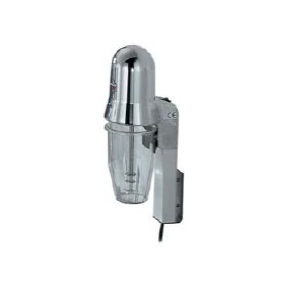
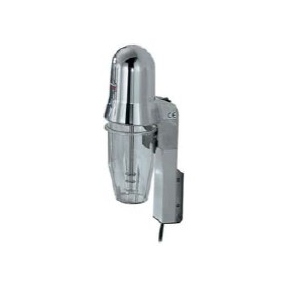
The mixer design allows wall-mounted or freestanding installation. Containers made of polycarbonate withstand temperatures from -20°C to +100°C and resist breakage when dropped from up to 1.5 m.
Energy efficiency of electric mixers results in 60% lower energy consumption compared to manual shaking when preparing over 100 drinks daily. The investment payback period in professional venues is 8–12 months.