Gastronomy Hoods
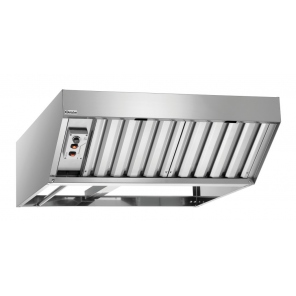
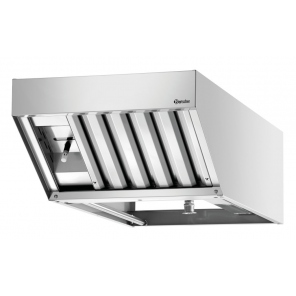
A gastronomic hood is a specialized ventilation device that is a key component of professional kitchens, catering establishments, and food industry facilities. Unlike standard kitchen hoods, gastronomic systems are characterized by significantly higher efficiency, durability, and advanced filtration systems, allowing effective removal of contaminants generated during intense kitchen operations.
What is a Gastronomic Hood and Why is it Essential in a Professional Kitchen?
A professional gastronomic hood with an extractor performs several crucial functions in the kitchen space:
- Removal of polluted air containing fumes, smoke, and solid particles
- Reduction of temperature in the working area
- Elimination of excess moisture
- Trapping grease and other contaminants
- Improving working conditions for staff
In the context of occupational health and safety regulations and sanitary requirements, installing an appropriate ventilation system is mandatory in all gastronomic facilities. A gastronomic hood must meet a range of technical and safety standards, including:
- PN-EN 16282 standard for industrial kitchen equipment
- Fire safety requirements as specified in national regulations
- HACCP hygiene standards
- Energy efficiency guidelines
The primary function of an industrial hood is to ensure proper air exchange in the kitchen space. The ventilation system must be tailored to the specific nature of the operations, considering:
- The type and intensity of culinary processes
- The size and layout of the kitchen space
- The type of heating appliances used
- Air temperature and humidity requirements
A properly selected and installed gastronomic hood ensures not only compliance with regulations but also provides safe and comfortable working conditions. In a professional kitchen, where temperatures can exceed 35°C, and humidity reaches 70%, an efficient ventilation system is crucial for maintaining appropriate hygiene and workplace safety standards.
Modern gastronomic hoods are equipped with advanced control systems that allow for:
- Automatic performance adjustment depending on workload intensity
- Monitoring of air parameters
- Control of filter contamination levels
- Optimization of energy consumption
- Integration with fire protection systems
The selection of an appropriate ventilation system should be preceded by a detailed analysis of needs and technical conditions. It is essential to consider not only current requirements but also the development plans of the catering facility. A well-chosen gastronomic hood is a long-term investment in the safety and efficiency of kitchen operations.
Types of Gastronomy Hoods
Various types of hoods are used in professional gastronomy, and their selection depends on the kitchen's specifics, the type of appliances used, and the spatial layout of the room. Each type of gastronomic hood has specific technical parameters and applications.
Wall-mounted Hoods
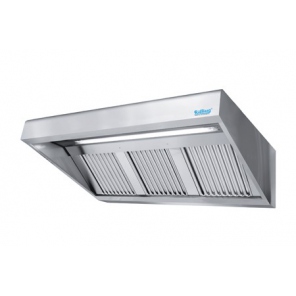
Wall-mounted hoods are the most commonly used solution in gastronomy, installed directly against the wall above the line of kitchen appliances. Their design is based on the following elements:
- Extraction chamber with a depth of 900-1200 mm
- Wall mounting system
- Integrated filtration system
- Workstation lighting
- Ventilation connection ducts
Key advantages of wall-mounted hoods:
- Efficient use of kitchen space
- Ease of installation and maintenance
- Modular connectivity
- Good efficiency in capturing contaminants
Central (Island) Hoods
Central, or island, hoods are used above kitchen islands or centrally placed appliance lines. This type of industrial hood features:
- Two-sided or four-sided extraction system
- Enhanced filtration area
- Reinforced support structure
- Expanded lighting system
Technical specifications for central hoods include:
- Width: 1600 to 3000 mm
- Chamber height: 450-600 mm
- Performance: 1500-4000 m³/h per linear meter
- Noise level: below 55 dB(A)
Condensation Hoods
Condensation hoods are specialized solutions designed for kitchens using convection ovens and industrial dishwashers. Their unique design ensures:
- Efficient capture of water vapor
- Condensation and drainage of droplets
- Reduction of room humidity
- Heat recovery from water vapor
The condensation system in these hoods consists of:
- Stainless steel condensation baffles
- Drainage system
- Integrated anti-drip system
- Automatic humidity control system
Each type of gastronomic hood with an extractor requires the appropriate selection of performance and technical parameters to the specific needs of the operation. The right choice directly affects ventilation system efficiency and operating costs.
Induction Hoods
Induction hoods represent the latest technology in gastronomic ventilation systems. They utilize the phenomenon of air induction, significantly increasing their efficiency while reducing energy consumption. Key components of the induction system include:
- Air supply nozzles with specially designed geometry
- Control system for the airflow
- Integrated temperature and humidity sensors
- Automatic flow control system
Main advantages of induction hoods:
- 30-50% energy savings compared to traditional systems
- Increased efficiency in capturing contaminants
- Reduced exhaust air flow requirements
- Improved thermal comfort in the working area
Key Parameters of Gastronomy Hoods
Performance and Airflow
Accurately determining the required performance of a gastronomic extractor is essential for effective ventilation system operation. Key parameters to consider:
- Exhaust air flow (m³/h)
- Airflow velocity in the capture plane (m/s)
- Pressure drop across filtration elements (Pa)
- Contaminant capture efficiency (%)
The performance selection depends on factors such as:
- Type and power of heating appliances
- Dimensions of the working area
- Intensity of thermal processes
- Required air exchange rate
Dimensions and Adaptation to Kitchen Space
Proper sizing of a gastronomic hood is crucial for its effective operation. Basic sizing principles:
- Hood width: at least 200 mm wider on each side than the appliances' width
- Wall extension: at least 20% greater than the appliance depth
- Installation height: 1800-2200 mm above the floor
- Catch angle: 45-60 degrees
When designing a ventilation layout, consider:
|
Parameter
|
Minimum Value
|
Recommended Value
|
|
Air velocity in the frontal plane
|
0.25 m/s
|
0.3-0.5 m/s
|
|
System performance reserve
|
15%
|
20-25%
|
|
Filtration area
|
0.8 m²/1000 m³/h
|
1.2 m²/1000 m³/h
|
When selecting dimensions, also consider service space for maintenance and cleaning. Minimum service space should be:
- 800 mm in front of the hood for filter access
- 500 mm on the side for cleaning
- 600 mm above the hood for installation access
Materials and Durability
Professional gastronomic hoods are made from selected materials meeting stringent durability and hygiene requirements. The primary construction material is stainless steel in the following variants:
- AISI 304 (1.4301) - basic construction material
- AISI 316L (1.4404) - for environments with increased aggressiveness
- AISI 430 (1.4016) - for components not directly exposed to fumes
Key material parameters include:
- Body sheet thickness: 1.0-1.5 mm
- Filter sheet thickness: 1.5-2.0 mm
- Surface finish: technical polish or satin
- Connection seal class: minimum IP54
Filtration Systems in Gastronomic Hoods
Labyrinth Filters
Labyrinth filters are the basic component of filtration systems in gastronomic hoods. Their design, based on multiple air flow direction changes, ensures:
- Grease separation efficiency: 85-95%
- Low airflow resistance: 30-60 Pa
- Ease of cleaning in industrial dishwashers
- Long service life: 5-8 years with proper maintenance
Cyclone Filters
Cyclone filters use centrifugal force to separate solid particles and grease droplets. They feature:
- High filtration efficiency: 92-98%
- Increased airflow resistance: 80-120 Pa
- Capability to operate at high temperatures
- Resistance to clogging
UV Filters
UV filtration systems are the most advanced solution for air purification in gastronomic hoods with extraction. This technology provides:
- Photocatalytic breakdown of grease particles
- Odor neutralization: up to 99% efficiency
- Fire risk reduction
- Reduced frequency of duct cleaning
Recommended maintenance for filtration systems:
|
Filter Type
|
Cleaning Frequency
|
Cleaning Method
|
|
Labyrinth
|
Every 7-14 days
|
Dishwasher or manual washing
|
|
Cyclone
|
Every 14-30 days
|
Pressure washing
|
|
UV
|
Every 3-6 months
|
UV lamp replacement
|
A properly selected and maintained filtration system in a gastronomic hood ensures not only compliance with air cleanliness standards but also significantly impacts fire safety and energy efficiency of the entire installation. Regular inspections and maintenance of all filtration system elements are essential for maintaining optimal performance and long service life of the entire ventilation system.